Best water filters for reducing microplastics (2026)
Compare picks & prices ↓Most pitcher filters that claim 'microplastic reduction' aren't certified to anything. Here are the ones that actually are — and the cheap upgrade most Brita households should make.
We may earn a commission from our links or codes.
Choose by use case
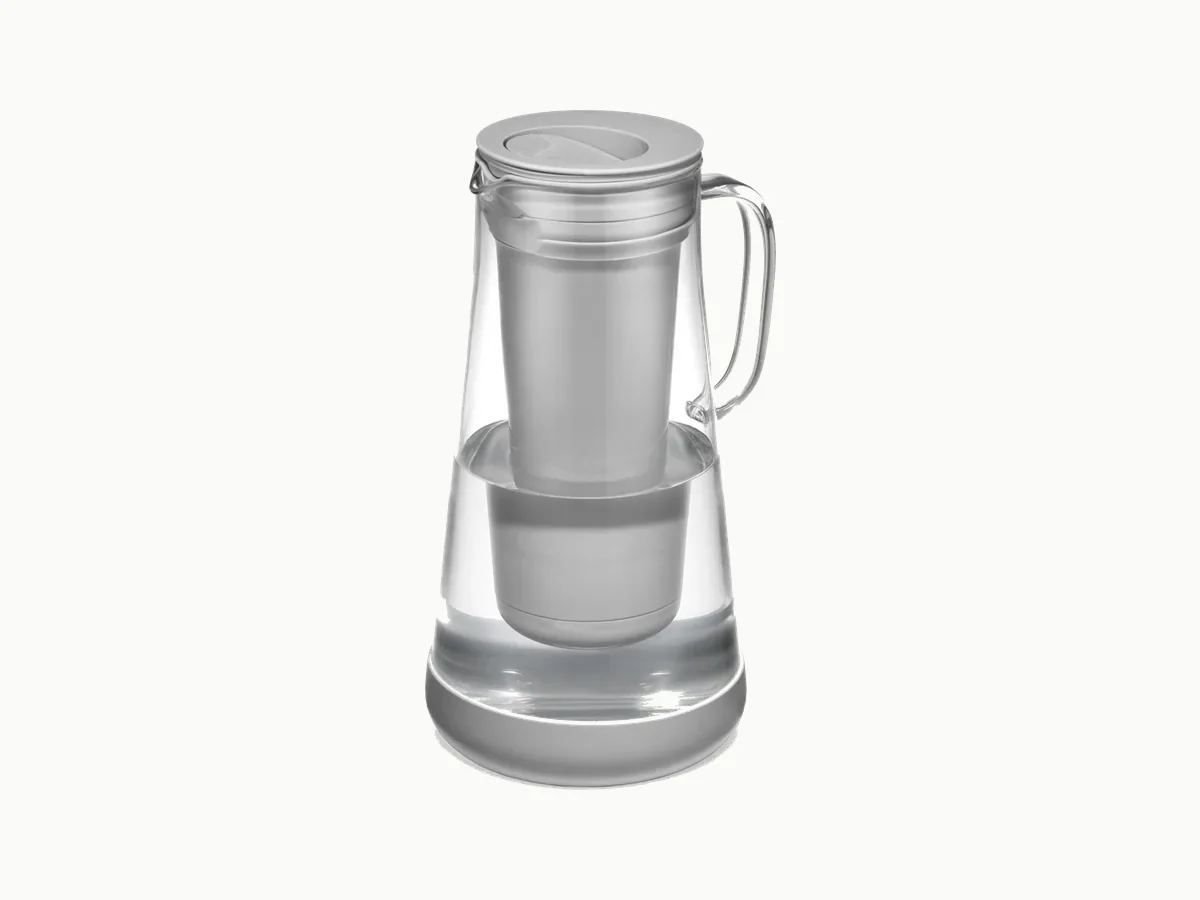
- LifeStraw Home 7-Cup Pitcher (Glass)Strong BuyBest overall — NSF/ANSI 401 certified, glass body, the rare 'real' microplastic filter at this price.Our full review$64.95Price snapshot: September 6, 2026Prices change often; use the retailer link for the current price.
-
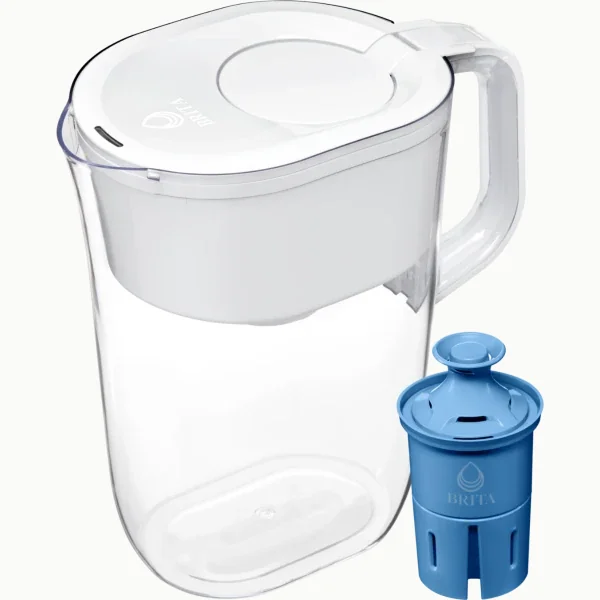 Brita Everyday Elite (with Elite filter)Good, But Not EssentialBudget pick — the Elite filter is the meaningful upgrade over standard Brita.Our full review$36.99 Amazon snapshot checked September 6, 2026Price snapshot: September 6, 2026Prices change often; use the retailer link for the current price.
How we'd choose
| Pick | Our call | Buy it for | The catch |
|---|---|---|---|
| LifeStraw Home 7-Cup Pitcher (Glass) | Strong Buy | — | — |
| Brita Everyday Elite (with Elite filter) | Good, But Not Essential | — | — |
-
LifeStraw Home 7-Cup Pitcher (Glass)
- Our call
- Strong Buy
- Buy it for
- —
- The catch
- —
-
Brita Everyday Elite (with Elite filter)
- Our call
- Good, But Not Essential
- Buy it for
- —
- The catch
- —
As an Amazon Associate, we may earn from qualifying purchases.
If you Google “best water filter for microplastics” you’ll get fifty articles, most of them ranking products no one tested, all linking to whichever pitcher pays the highest commission. The reality is much simpler: very few pitchers are actually third-party certified for microplastic reduction. The ones that are tend to be the right answer.
Here’s the short version, what to look for, and the cheap upgrade most Brita households are missing.
PFAS: the spec most pitchers quietly fail
Checked September 2026. If forever chemicals are your reason for filtering, this is the only table that matters — and the differences are not marginal.
| Pitcher | PFAS (independent comparative testing) | Certification route |
|---|---|---|
| ZeroWater | Effectively complete removal | IAPMO certified to NSF/ANSI 42, 53 and 401 (26 contaminants) |
| Clearly Filtered | Effectively complete removal; broadest per-compound data | NSF/ANSI 42 and 372; health claims via independent lab testing |
| Brita Elite | ~22% of total PFAS | NSF/ANSI 53 certified for lead (99% reduction) |
The Brita Elite is the trap here. It is a good filter — NSF 53 certified for lead, 99% reduction, six-month filter life, widely available — and a great many people buy it specifically for PFAS, which it does not meaningfully address. If chlorine taste and lead are your concerns, it is a sensible, low-friction choice. If you are filtering for forever chemicals, it is the wrong product and the word “Elite” is doing a lot of work.
Note also the difference in how the two strong performers are evidenced. ZeroWater carries formal IAPMO certification against the NSF standards, with ongoing auditing. Clearly Filtered demonstrates its health-contaminant performance through published independent laboratory testing rather than NSF 53 certification. Both are credible; they are not the same kind of assurance, and buyers who specifically want formal certification should know which they are getting.
What “certified” actually means
The relevant certifications are issued by NSF International (an independent standards body) and similar groups like WQA. The codes that matter:
- NSF/ANSI 401 — emerging contaminants, including microplastics. This is the one to look for if microplastics are your priority.
- NSF/ANSI 53 — health contaminants like lead and parasitic cysts.
- NSF/ANSI 42 — aesthetic contaminants like chlorine.
- NSF/ANSI 244 — microbiological cysts (bacteria, viruses).
Pitchers that aren’t tested to these standards can still claim “microplastic reduction” in their marketing. The certification logos on the box are what tell you the test actually happened.
My picks
Best overall: LifeStraw Home Pitcher
The Home pitcher is one of the small handful of consumer pitchers certified to NSF/ANSI 401 alongside 42, 53, and 244 — the broadest certification list at a reasonable price. The glass body means there’s no plastic touching the filtered water, which solves a low-grade frustration with every Brita-style pitcher. Slow pour rate is the main downside.
I wrote up the longer version in our LifeStraw Home review.
Budget pick: Brita Everyday with the Elite filter
Most Brita households buy the standard Brita filter — the one that targets chlorine and a smaller list of other contaminants. The Elite filter is the same housing with a much better cartridge. Brita’s current filter page says Elite reduces 99% of lead and reduces chlorine, asbestos, cadmium, and microplastics; the exact certification scope belongs to the named claim, so check the current certification details before treating it as a universal filter. It also lasts about 3× as long as the standard cartridge.
If you already own a Brita pitcher, swap your standard filter for the Elite. That’s the quietest 5-minute kitchen upgrade you can make. The pitcher I link to comes with one Elite filter.
Filters I’d skip
Without naming names: a $250 counter-top “alkaline ionizer” that under-performs a $60 LifeStraw on every certified contaminant. Filter water bottles whose claims are uncertified. Brands that advertise “removes 99% of microplastics” without specifying which microplastics or what particle size threshold.
If a brand can’t show you their NSF or WQA certification report, treat the marketing language with skepticism.
How to choose
- Check your tap water on the EWG database.
- Identify what your actual concerns are: chlorine taste, lead, microplastics, PFAS, or general “I don’t trust the pipes.”
- Match the filter certification to the concern.
- Default to the cheapest certified option.
Most people overspend on this category. A $60 pitcher with the right certifications outperforms a $300 pitcher with vibes.
Final answer
Buy the LifeStraw Home Pitcher if you want serious filtration in a glass body. Buy the Brita Everyday with the Elite filter if you want the cheaper everyday upgrade. Skip everything else until your needs change.
-
LifeStraw Home 7-Cup Pitcher (Glass)
Strong Buy
-
Brita Everyday Elite (with Elite filter)
Good, But Not Essential
As an Amazon Associate, we may earn from qualifying purchases.
Frequently asked questions
What size is a microplastic, exactly?
Where can I see what's in my actual tap water?
Do I need to filter shower water too?
Are 'alkaline' or 'hydrogen' filters worth it?
Affiliate disclosure
Some links on this page may be affiliate links — we may earn a commission if you buy through them, at no extra cost to you. We only recommend products we think are worth considering. Verdicts are not influenced by commissions.