Egofit Walker Pro review: the under-desk treadmill I actually kept using
Listed price ~$329 Recorded price snapshot. Confirm the final total at checkout.
Check current price on Amazon →We may earn a commission if you buy through our links or codes.
Quietest, lowest-profile walking pad I've used at this price. The fixed 5% incline is a nice touch — cheap but real Zone 2 cardio while you're on calls.
Our verdict
Quietest, lowest-profile walking pad I've used at this price. The fixed 5% incline is a nice touch — cheap but real Zone 2 cardio while you're on calls.
As an Amazon Associate, we may earn from qualifying purchases.
Why we landed on Definitely Well Worth It
Quietest, lowest-profile walking pad I've used at this price. The fixed 5% incline is a nice touch — cheap but real Zone 2 cardio while you're on calls.
Who we'd buy it for Anyone with a standing desk and a sedentary job who wants 30–90 minutes a day of low-effort walking — what Peter Attia calls the highest-ROI form of cardio you can build into a normal life.
Who we'd tell to skip it You want to actually run on it (not what walking pads are built for), you'll exceed 220 lb, or you don't already have a standing desk.
The part we will not talk past The remote is the weakest piece — feels brittle.
Pros
- Fits under nearly any standing desk — low enough that the belt isn't an issue.
- Quiet enough for video calls at 1.5–2 mph.
- Fixed 5% incline genuinely changes the workout in a useful way.
Cons
- The remote is the weakest piece — feels brittle.
- Weight limit (220 lb) is lower than higher-tier models.
- Belt edges show wear sooner than you'd hope.
We’d buy the EGOFIT Walker Pro if you already have a standing desk and a sedentary job and you want 30–90 minutes a day of easy walking. We’d skip it if you want to actually run on it, you’ll exceed 220 lb, or you don’t already have a standing desk. Walking pads are not running decks, and the fixed incline only helps if the walking habit is the job.
For a few months in 2024 I was skeptical that walking pads were a real category — I figured the people in the YouTube reviews were paid to like them. Then I stopped using a chair almost entirely and noticed two things: my back stopped aching, and my energy mid-afternoon was different. The pad turned out to be one of the more high-leverage pieces of gear I’ve bought.
The case for walking pads at all
Peter Attia has spent years writing about Zone 2 cardio — the conversational-pace effort that most people get nowhere near in modern life. The pitch is that 3–4 hours per week of Zone 2 has outsized effects on metabolic health and aerobic base, and that walking at a low incline is the most under-rated way to get there.
The under-desk walking pad, viewed through that lens, is a Zone 2 enabler. You stack the cardio on top of work hours instead of carving it out of your day. That’s the actual value prop — not “burning calories at your desk.”
What separates the Walker Pro from cheaper pads
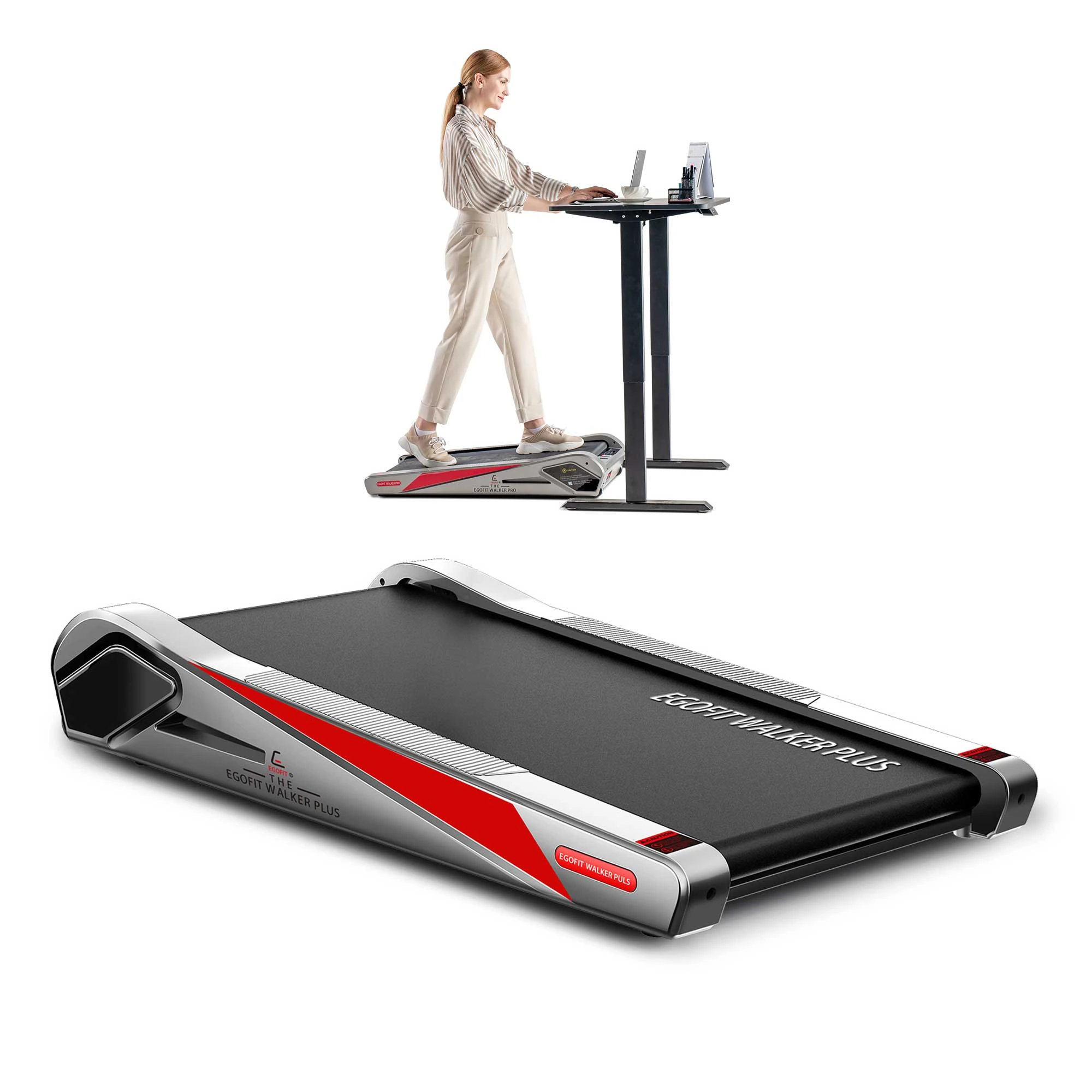
The fixed 5% incline. Most $200–$300 pads are flat. At a 5% grade, walking at 2 mph puts most people right at the lower edge of Zone 2 without needing to walk faster — which matters because faster equals louder, and louder equals unusable on a Zoom call.
The motor is the second thing. Cheap pads thermal-cut after 60–75 minutes of continuous use. The Walker Pro hasn’t, in my experience. Daily 90-minute sessions for several months haven’t tripped a fault.
The third is footprint. At about 4.5” tall, it slides under almost any standing desk without forcing you to raise the desk to a weird height. That sounds minor. It’s not.
Where it falls short
The remote is the worst part of the package. It’s a thin plastic shell that feels like a $5 component on a $329 product. Mine has survived but I wouldn’t bet a year on it.
The 220 lb weight limit is real and not a soft cap. If you’d be near or above that, look at heavier-duty competitors.
The belt edges are starting to show wear after months of daily use. Not failing, but not pristine. I’d expect to replace the belt eventually.
What about the alternatives?
I tested or borrowed a few others before settling. The folding pads (e.g., WalkingPad C2) are useful if you genuinely need to put it away — small apartments, shared spaces — but the noise floor is higher. Sub-$250 pads work for 1–2 months and then start to develop motor issues.
The Walker Pro lands in the sweet spot: cheap enough that it’s a reasonable bet, well-built enough that it actually lasts.
Price & value
At around $329 (current price on Amazon), this is one of the highest-ROI fitness purchases you can make if you have a sedentary job. Per-hour-of-use cost over a year is something like $0.05.
Final verdict
Definitely Well Worth It. Sub-desk walking treadmill with fixed 5% incline.
If you have a standing desk and you’d actually use this 30+ minutes a day, the case is open-and-shut. If you don’t have a standing desk, buy that first. If you don’t have a sedentary job, you probably don’t need a walking pad — go for a real walk outside instead.
Who it's for
Anyone with a standing desk and a sedentary job who wants 30–90 minutes a day of low-effort walking — what Peter Attia calls the highest-ROI form of cardio you can build into a normal life.
Who should skip it
You want to actually run on it (not what walking pads are built for), you'll exceed 220 lb, or you don't already have a standing desk.
In this review
- Egofit Walker ProSub-desk walking treadmill with fixed 5% incline.Prices change often; use the retailer link for the current price.
Egofit Walker Pro
Definitely Well Worth It
Quietest, lowest-profile walking pad I've used at this price. The fixed 5% incline is a nice touch — cheap but real Zone 2 cardio while you're on calls.
As an Amazon Associate, we may earn from qualifying purchases.
Frequently asked questions
Is it actually quiet enough for video calls?
Does the fixed incline matter?
What about hardwood floors?
What about Zone 2 — is walking actually cardio?
Affiliate disclosure
Some links on this page may be affiliate links — we may earn a commission if you buy through them, at no extra cost to you. We only recommend products we think are worth considering. Verdicts are not influenced by commissions.