ZeroWater 10-Cup Pitcher review: strong buy
We may earn a commission if you buy through our links or codes.
Best for hard water — very effective, but filters can burn out fast.
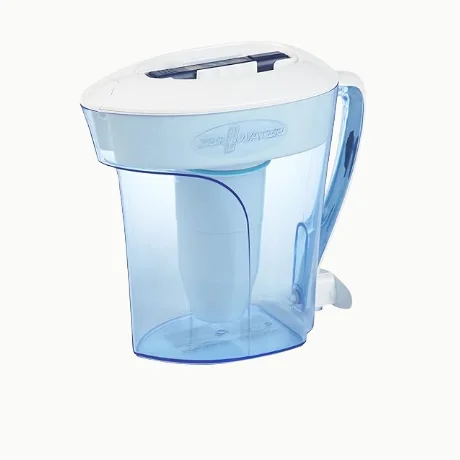
Our verdict
Best for hard water — very effective, but filters can burn out fast.
As an Amazon Associate, we may earn from qualifying purchases.
Why we landed on Strong Buy
Best for hard water — very effective, but filters can burn out fast.
Who we'd buy it for Hard-water households that want aggressive dissolved-solid reduction.
Who we'd tell to skip it People who prefer mineral-rich water or have low-TDS tap water already.
The part we will not talk past Filter life is shorter in hard-water areas
Pros
- TDS meter included — you can actually verify it's working
- Strips minerals other pitchers leave behind
- NSF certified for lead and chromium
Cons
- Filter life is shorter in hard-water areas
- Filtered water can taste flat (some people don't like it)
- Slightly acidic pH after filtration
We’d buy the ZeroWater 10-Cup Pitcher if you have hard water and want aggressive dissolved-solid reduction. We’d skip it if you prefer mineral-rich water or already have low-TDS tap water. It tries to strip water down to nothing, which works, and the annoyance is real: filters can burn out fast.
Quick answer
A five-stage filter, IAPMO certified against NSF/ANSI 42, 53 and 401, covering 26 contaminants including total PFAS, lead and pharmaceuticals. In independent testing it achieved effectively complete PFAS removal. The cost is filter life and flow rate, and both are worse than the competition.
What “zero” actually means
ZeroWater targets total dissolved solids — everything dissolved in your water, including minerals. The included TDS meter should read 000 with a fresh filter.
The five-stage system combines mechanical filtration, activated carbon, and crucially an ion-exchange resin, which is what removes dissolved solids that carbon alone leaves behind. That resin is the reason the performance is exceptional and also the reason the filters exhaust quickly.
Where it genuinely wins
PFAS. In independent comparative testing, ZeroWater achieved complete removal of the tested PFAS compounds. For context, Brita Elite managed roughly 22% in the same testing. If forever chemicals are your reason for filtering, this is one of the few pitchers that actually addresses them.
Certification breadth. IAPMO certification against NSF/ANSI 42 (taste and odor), 53 (health contaminants) and 401 (emerging contaminants including pharmaceuticals) is unusually complete for a pitcher.
Lead and heavy metals are handled thoroughly by the ion-exchange stage.
The TDS meter. Including a meter is a real transparency choice — you can verify the filter is working and know exactly when it is spent, rather than guessing from a calendar.
Where it frustrates
Filter life is short. The ion-exchange resin saturates, and how fast depends entirely on your incoming water. In hard-water areas filters can exhaust in a few weeks. This is the main ongoing cost and the main complaint.
Flow slows dramatically near end of life. A fresh filter is acceptable; a nearly spent one is genuinely slow.
Taste is divisive. Removing all dissolved solids removes the minerals that make water taste like water. Some people find the result clean; others find it flat or faintly metallic. This is worth knowing before committing.
A sulfur smell at end of filter life is a known and documented behaviour. It signals the filter is spent rather than a defect, but it is unpleasant.
Running costs, honestly
Cost per gallon is the highest in the pitcher category, and it scales with how hard your water is. Test your TDS before committing — if you are on very hard water, a ZeroWater habit becomes expensive quickly, and a different approach may serve you better.
Who should buy it
Anyone filtering specifically for PFAS, lead, or the broadest verified contaminant coverage available in a pitcher, who is willing to accept the running cost. Also anyone who wants to actually verify their filtration rather than trust a calendar indicator.
Who should skip it
Skip it on very hard water unless you have budgeted for frequent replacements. Skip it if you like the taste of mineral water. And skip it if flow rate and convenience matter more than maximum removal — Brita Elite is far less demanding if lead and taste are your real concerns.
Final verdict
Strong Buy for contaminant removal specifically. It does the hardest job in the category better than nearly anything else at pitcher scale, and the certification breadth backs that up. Just go in knowing the filters are consumables in a way competitors’ are not, and test your water’s TDS first.
See our best water filter pitchers guide, and check the current price at the retailer link.
Who it's for
Hard-water households that want aggressive dissolved-solid reduction.
Who should skip it
People who prefer mineral-rich water or have low-TDS tap water already.
In this review
- ZeroWater 10-Cup PitcherBest for hard water — very effective, but filters can burn out fast.Prices change often; use the retailer link for the current price.
ZeroWater 10-Cup Pitcher
Strong Buy
Best for hard water — very effective, but filters can burn out fast.
As an Amazon Associate, we may earn from qualifying purchases.
Frequently asked questions
Does ZeroWater remove PFAS?
Why do ZeroWater filters run out so fast?
Why does my ZeroWater smell like sulfur?
Does removing all minerals make water unhealthy?
What does the TDS meter actually tell you?
Affiliate disclosure
Some links on this page may be affiliate links — we may earn a commission if you buy through them, at no extra cost to you. We only recommend products we think are worth considering. Verdicts are not influenced by commissions.