Garmin Index Sleep Monitor review: a better way to sleep without a watch?
Listed price $169.99 Recorded price snapshot. Confirm the final total at checkout.
Check current price on Amazon →We may earn a commission if you buy through our links or codes.
A sensible accessory for Garmin users who hate sleeping in a watch. The no-subscription price and seven-night battery are appealing, but the device makes less sense if you already sleep comfortably in your watch or want an all-day tracker.
Our verdict
A sensible accessory for Garmin users who hate sleeping in a watch. The no-subscription price and seven-night battery are appealing, but the device makes less sense if you already sleep comfortably in your watch or want an all-day tracker.
As an Amazon Associate, we may earn from qualifying purchases.
Why we landed on Good, But Not Essential
A sensible accessory for Garmin users who hate sleeping in a watch. The no-subscription price and seven-night battery are appealing, but the device makes less sense if you already sleep comfortably in your watch or want an all-day tracker.
Who we'd buy it for Garmin users who want overnight recovery data but do not want to sleep in their main watch.
Who we'd tell to skip it You already sleep comfortably in a watch, want a single all-day wearable, or expect clinical sleep testing.
The part we will not talk past It is primarily a sleep accessory, not a complete daytime activity tracker.
Pros
- Upper-arm placement gives Garmin users a way to collect overnight data without wearing a bulky watch.
- Up to seven nights of battery life reduces charging friction.
- Sleep score, stages, HRV status, breathing variations, skin temperature, and Pulse Ox feed into Garmin Connect.
- Garmin does not require a separate subscription for the core Connect experience.
Cons
- It is primarily a sleep accessory, not a complete daytime activity tracker.
- Fit and comfort depend on choosing the correct S/M or L/XL band size.
- The best value appears when you already use Garmin Connect and compatible Garmin hardware.
- Consumer sleep metrics are not a diagnosis or a substitute for medical evaluation.
We’d buy the Garmin Index Sleep Monitor if you already use Garmin and you want overnight data without sleeping in your main watch. We’d skip it if you already sleep comfortably in a watch, you want a single all-day wearable, or you expect clinical sleep testing. It is a sleep accessory, not a daytime tracker, and the value drops if you are not already in Garmin Connect.
The Garmin Index Sleep Monitor is built around a problem that sounds minor until you have tried sleeping in a large sports watch: you want the overnight data, but you do not want the watch on your wrist.
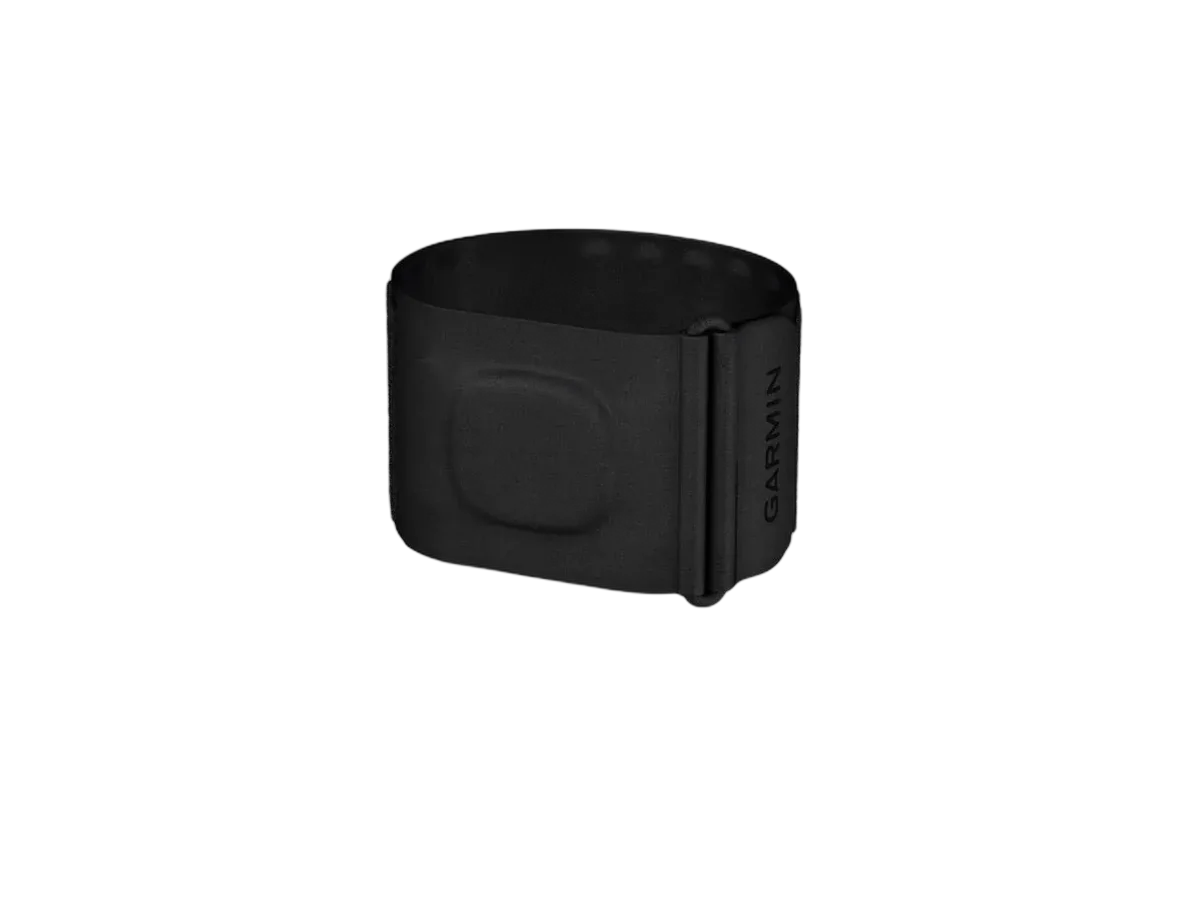
Garmin’s answer is a small, screenless band worn on the upper arm. It collects sleep and recovery metrics while your primary watch charges on the nightstand, then syncs the data to Garmin Connect in the morning.
This is a review of whether it is actually worth it. Garmin lists up to seven nights of battery life, sleep stages, HRV status, breathing variations, skin temperature, Pulse Ox, and a sleep score. The official list price is $169.99. Those specs make the product easy to understand; they do not prove that every user will find an upper-arm band comfortable or that syncing will be flawless every night.
The best reason to buy it is simple
The Index Sleep Monitor is not trying to replace your Garmin watch during the day. It is trying to cover the hours when your watch is least comfortable or least convenient.
That makes the accessory surprisingly logical for people already invested in Garmin. A Fenix, Forerunner, Venu, or other compatible watch can charge overnight while the Index collects the sleep data needed to fill in recovery trends. The experience is more coherent than buying a separate sleep platform and hoping the numbers line up.
For anyone outside the Garmin ecosystem, the value is less obvious. An Oura Ring, Fitbit, or WHOOP-style product may give you a broader all-day experience. The Index is strongest when it solves a specific Garmin-user annoyance.
Upper-arm placement changes the trade-off
The band avoids the wrist, but that does not make fit irrelevant. Garmin offers S/M and L/XL sizes with overlapping measurements, so measuring your upper arm matters. A band that is too loose may shift during sleep; one that is too tight may become the exact comfort problem the product was meant to solve.
The placement also means this is a different kind of wearable. You are not going to glance at it, use it for live workout feedback, or wear it as a visible piece of everyday tech. That is a feature if you want the device to disappear. It is a limitation if you want one wearable to handle every situation.
The no-subscription angle helps
The $169.99 hardware price is not trivial, but the core Garmin Connect experience does not add the same kind of mandatory monthly fee associated with several premium sleep platforms. That makes the long-term cost easier to forecast.
The catch is that the device is an accessory. You are paying for a second piece of hardware to protect the data pipeline you already use. If you already wear a watch every night without discomfort, the Index may add redundancy rather than value.
Do not confuse sleep data with medical testing
Sleep scores, HRV status, breathing variations, and Pulse Ox can help you notice patterns. They cannot diagnose sleep apnea, explain persistent fatigue, or replace a clinician’s evaluation.
That distinction matters because sleep products are very good at turning a normal night into a score that feels authoritative. Use the data as a prompt for better habits or a conversation with a professional, not as a medical verdict.
Final verdict
Garmin Index Sleep Monitor is a focused accessory with a clear audience. It is a good idea for Garmin users who want to charge their watch overnight and still collect sleep data. The seven-night battery and no-required-subscription approach strengthen the case.
It is not the right universal sleep tracker. If you want a single device for daytime activity, sleep, and broader health insights, look at an all-day wearable instead. If your only problem is a watch on the wrist at night, Garmin’s upper-arm solution is worth a serious look.
Editorial take: Good Garmin Accessory.
This review is based on Garmin’s published specifications and the current Amazon S/M listing, not hands-on testing. Confirm sizing, seller, fulfillment, and warranty terms before purchasing.
Who it's for
Garmin users who want overnight recovery data but do not want to sleep in their main watch.
Who should skip it
You already sleep comfortably in a watch, want a single all-day wearable, or expect clinical sleep testing.
In this review
- Garmin Index Sleep MonitorAmazon ASIN checked for the S/M variant on August 3, 2026. Confirm the part number, size, seller, and warranty eligibility before buying.Prices change often; use the retailer link for the current price.
Garmin Index Sleep Monitor
Good, But Not Essential
A sensible accessory for Garmin users who hate sleeping in a watch. The no-subscription price and seven-night battery are appealing, but the device makes less sense if you already sleep comfortably in your watch or want an all-day tracker.
As an Amazon Associate, we may earn from qualifying purchases.
Frequently asked questions
Is the Garmin Index Sleep Monitor worth it?
Does Garmin Index Sleep Monitor require a subscription?
How long does the Garmin Index Sleep Monitor battery last?
What size Garmin Index Sleep Monitor should I buy?
Affiliate disclosure
Some links on this page may be affiliate links — we may earn a commission if you buy through them, at no extra cost to you. We only recommend products we think are worth considering. Verdicts are not influenced by commissions.
Health disclaimer
This content is for informational purposes only and is not medical advice. Talk to a qualified professional before starting new supplements, treatments, or major health changes.